
-
Sale
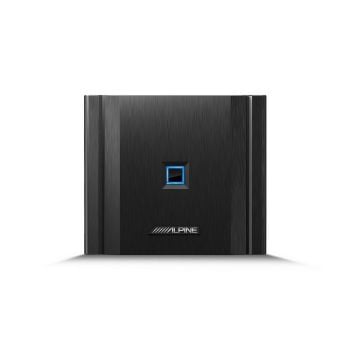 Alpine PXE-M60-4 6-Channel DSP Processor/4-Channel Amplifier
 Special Price $255.00 Regular Price $299.95
You Save 15% off RRP -
Sale
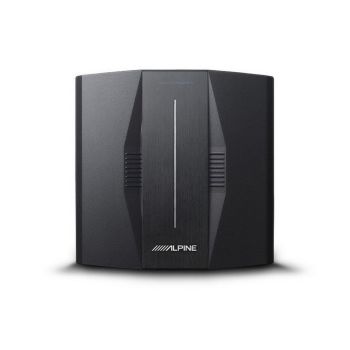 Alpine PXE-C80-88 OPTIM8 900W RMS 8-Channel DSP Amplifier
Special Price $1,011.00 Regular Price $1,199.00
Alpine PXE-C80-88 OPTIM8 900W RMS 8-Channel DSP Amplifier
Special Price $1,011.00 Regular Price $1,199.00
You Save $188.00 off RRP -
Sale
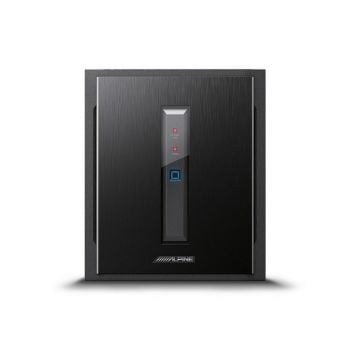 Alpine PXE-X800 12-Channel DSP Processor/8-Channel Amplifier
Special Price $841.00 Regular Price $999.95
Alpine PXE-X800 12-Channel DSP Processor/8-Channel Amplifier
Special Price $841.00 Regular Price $999.95
You Save $158.95 off RRP -
Sale
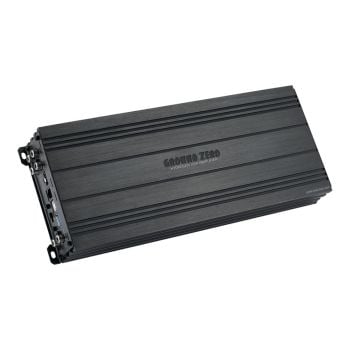 Ground Zero Hydrogen 5 Channel DSP Amplifier GZHA MINI FIVE-DSP
 Special Price $930.00 Regular Price $1,099.00
You Save $169.00 off RRP -
Sale
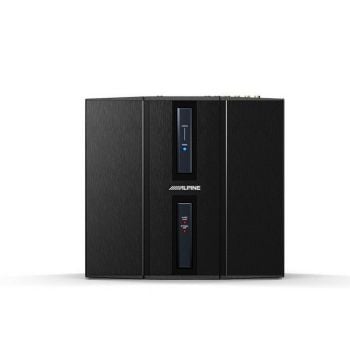 Alpine HDP-D90 Alpine Status 720W RMS 14-Channel DSP/12-Channel Amplifier
Special Price $2,550.00 Regular Price $2,999.00
Alpine HDP-D90 Alpine Status 720W RMS 14-Channel DSP/12-Channel Amplifier
Special Price $2,550.00 Regular Price $2,999.00
You Save $449.00 off RRP -
Sale
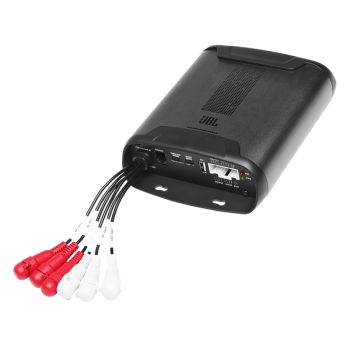 JBL DSP2544 4 Channel DSP Amplifier
 Special Price $419.85 Regular Price $549.95
You Save $130.10 off RRP -
Sale
 JBL DSP4086 8 Channel DSP Amplifier
Special Price $899.85 Regular Price $999.95
JBL DSP4086 8 Channel DSP Amplifier
Special Price $899.85 Regular Price $999.95
You Save $100.10 off RRP





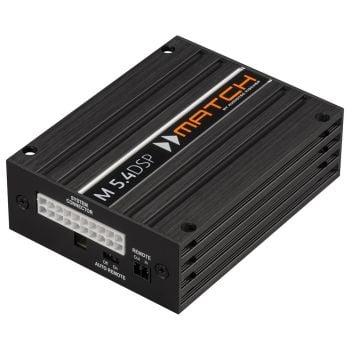




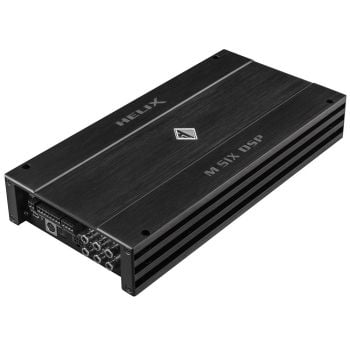

How do I choose the right DSP Amplifier?
Start by ascertaining precisely how many amplifier channels your system design has. You will have some flexibility if building an entire complete sound system from scratch. A split component speaker set has the choice of retaining the supplied passive crossovers (if they have them) and being considered just two channels (left and right) or being separated into each individual speaker and having four or even six discrete channels. Likewise, you may want to discretely amplify the front split component set but keep the rear set connected via their passive crossover networks to simplify things. The subwoofers in the system could be fed a mono signal and powered by one channel, or you could have stereo subwoofers powered by individual channels.
There is a myriad of ways to decide on the total number of channels the system will comprise but remember that the maximum benefit of DSP is only achieved when each individual speaker is tuned and powered by its own discrete channel.
When upgrading an otherwise completely factory standard sound system you will need to ascertain how many channels of discrete amplification the factory system has, as well as if the factory system uses an external amplifier and how the audio signal connects between it and the source. This could be line level, speaker level, or even a digital connection. Not all DSP amplifiers have a digital input, while some that do may only have a choice of either toslink or coaxial. You may also need an interface to convert an OEM digital connection to work with the amplifier. You need to consider this carefully if your factory head unit has a digital output signal.
Also, in many cases each factory amplifier channel may be sending all frequencies (20Hz to 20,000Hz) to each speaker, each of which may or may not have a small passive filter in line acting as a crossover. Ideally, you want a DSP amplified channel to replace every factory amplified channel the system already has. You also want to remove any passive filtering from the factory speakers so that they don’t adversely affect the tuning you will do the with DSP built into the amplifier.
When shopping for a DSP amplifier you’ll find they come in as few as four powered channels and as many as 14 powered channels. Some are speaker level input only, whereas other offer speaker level, RCA level, as well as one or even two types if digital inputs. You may also find that some will offer a fixed number of amplified channels while also offering additional DSP-tuneable RCA outputs to feed to traditional amplifiers.
The amplifier channels of DSP amplifiers also tend to work a bit differently compared to those of the traditional amplifiers. For a start, since you are expected to power an individual speaker from each channel – most DSP amplifier channels are not bridgeable with their paired channels. You may also find some models are only capable of being connected to 4ohm loads, which is fine in 99% of cases when powering full range speakers. Since there are fewer DSP amplifiers on offer compared to traditional amplifiers, it may be worth considering how much power per channel you desire to short list the DSP amplifiers that offer this into the total channels you need. This will be the quickest way to find a model that suits you, or you may find you need to use a DSP processor teamed with traditional amplifiers to get the job done to your satisfaction.