
-
Sale
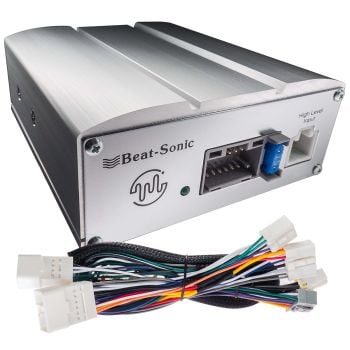 Encore Alpha Plug n Play Amplifier Upgrade fits Toyota 2014-2018 ENA-2T1
 Special Price $383.90 Regular Price $399.00
You Save 4% off RRP -
Sale
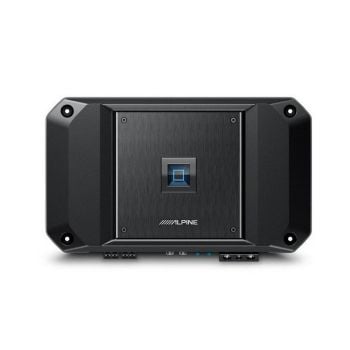 Alpine R2-A60F R2-Series 600W RMS Class-D 4-Channel Amplifier
 Special Price $600.00 Regular Price $699.95
You Save 14% off RRP -
Sale
 Pioneer GM-D9704 Class FD 4-Channel Bridgeable Amplifier
 Special Price $331.00 Regular Price $550.00
You Save $219.00 off RRP -
Sale
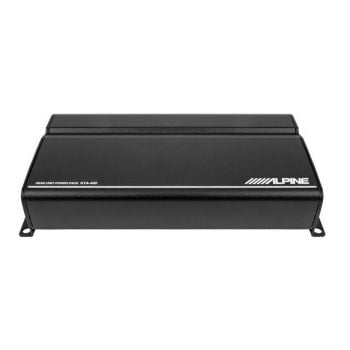 Alpine KTA-450 4-Channel Power Pack Amplifier
Special Price $306.00 Regular Price $359.95
Alpine KTA-450 4-Channel Power Pack Amplifier
Special Price $306.00 Regular Price $359.95
You Save 15% off RRP -
Sale
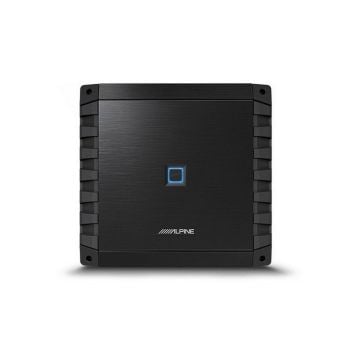 Alpine S2-A36F S2-Series 360W RMS Class-D 4-Channel Amplifier
Special Price $370.89 Regular Price $469.95
Alpine S2-A36F S2-Series 360W RMS Class-D 4-Channel Amplifier
Special Price $370.89 Regular Price $469.95
You Save 21% off RRP -
Sale
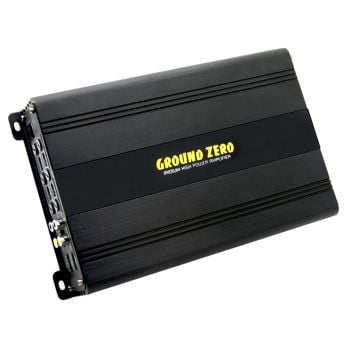 Ground Zero 4 Channel Iridium Amplifier GZIA 135.4
 Special Price $335.00 Regular Price $399.00
You Save 16% off RRP -
Sale
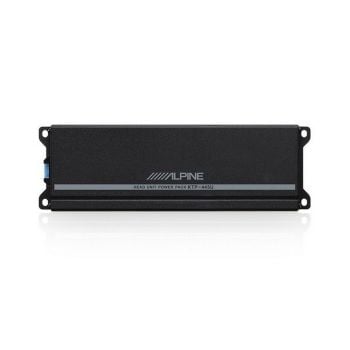 Alpine KTP-445U Power Pack 180W RMS 4-Channel Amplifier
Special Price $255.00 Regular Price $299.95
Alpine KTP-445U Power Pack 180W RMS 4-Channel Amplifier
Special Price $255.00 Regular Price $299.95
You Save 15% off RRP -
Sale
 Kenwood X3001-4 Compact D-Class 4 Channel Amplifier
 Special Price $312.25 Regular Price $399.00
You Save 22% off RRP -
Sale
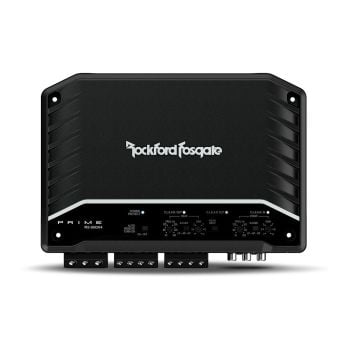 Rockford Fosgate R2-500X4 Prime 500W 4-Channel Amplifier
 Special Price $500.65 Regular Price $589.00
You Save 15% off RRP -
Sale
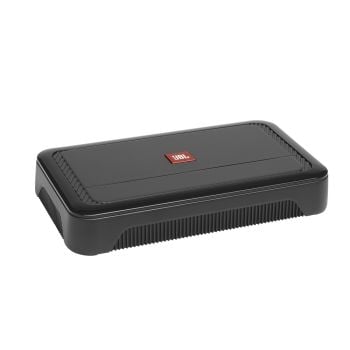 JBL Club A754 4 Channel Amplifier
 Special Price $289.85 Regular Price $499.95
You Save $210.10 off RRP -
Sale
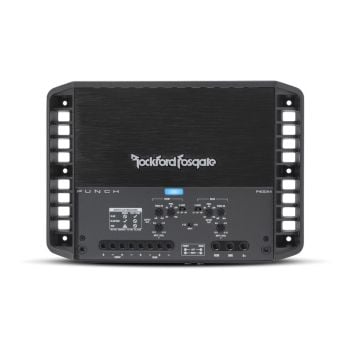 Rockford Fosgate P400X4 Punch 400W 4-Channel Amplifier
Special Price $611.15 Regular Price $719.00
Rockford Fosgate P400X4 Punch 400W 4-Channel Amplifier
Special Price $611.15 Regular Price $719.00
You Save $107.85 off RRP -
Sale
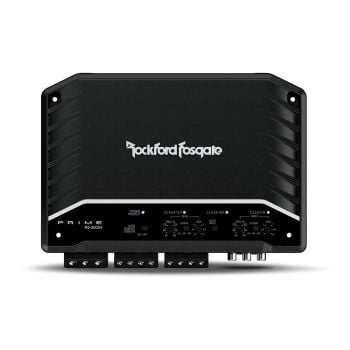 Rockford Fosgate R2-300X4 Prime 300W 4-Channel Amplifier
Special Price $399.20 Regular Price $499.00
Rockford Fosgate R2-300X4 Prime 300W 4-Channel Amplifier
Special Price $399.20 Regular Price $499.00
You Save 20% off RRP -
Sale
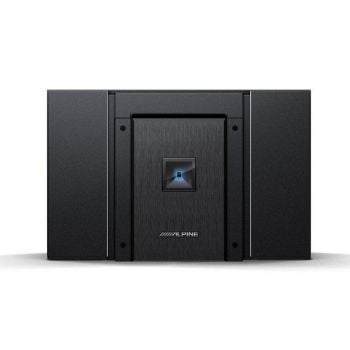 Alpine HDA-F60 Alpine Status 600W RMS Class-D Hi-Res 4-Channel Amplifier
Special Price $1,080.95 Regular Price $1,199.00
Alpine HDA-F60 Alpine Status 600W RMS Class-D Hi-Res 4-Channel Amplifier
Special Price $1,080.95 Regular Price $1,199.00
You Save $118.05 off RRP -
Sale
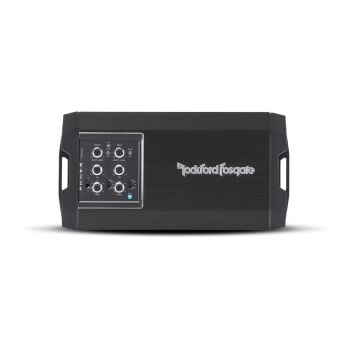 Rockford Fosgate T400X4ad Power 400W Class-AD 4-Channel Amplifier
Special Price $655.20 Regular Price $819.00
Rockford Fosgate T400X4ad Power 400W Class-AD 4-Channel Amplifier
Special Price $655.20 Regular Price $819.00
You Save $163.80 off RRP -
Sale
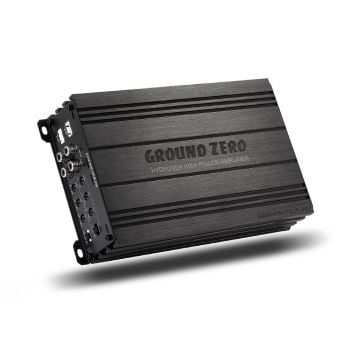 Ground Zero 24 Volt 4 Channel Hydrogen Amplifier GZHA MINI FOUR 24V
Special Price $635.00 Regular Price $749.00
Ground Zero 24 Volt 4 Channel Hydrogen Amplifier GZHA MINI FOUR 24V
Special Price $635.00 Regular Price $749.00
You Save $114.00 off RRP -
Sale
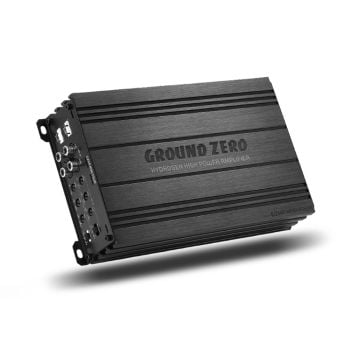 Ground Zero 4 Channel Hydrogen Amplifier GZHA MINI FOUR
Special Price $610.00 Regular Price $719.00
Ground Zero 4 Channel Hydrogen Amplifier GZHA MINI FOUR
Special Price $610.00 Regular Price $719.00
You Save $109.00 off RRP -
Sale
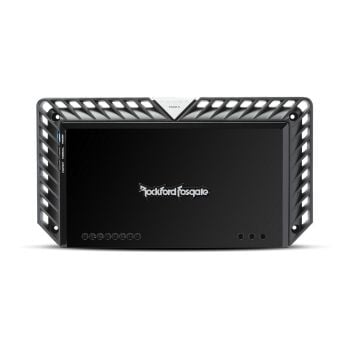 Rockford Fosgate T600-4 Power 600W 4-Channel Amplifier
Special Price $1,007.20 Regular Price $1,259.00
Rockford Fosgate T600-4 Power 600W 4-Channel Amplifier
Special Price $1,007.20 Regular Price $1,259.00
You Save $251.80 off RRP -
Sale
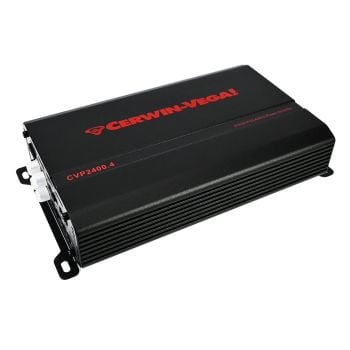 Cerwin Vega CVP2400.4 CVP Series 4 Channel Amplifier
 Special Price $279.00 Regular Price $319.00
You Save 13% off RRP -
Sale
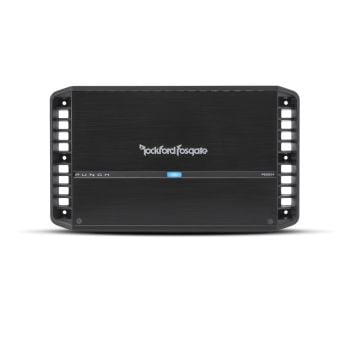 Rockford Fosgate P600X4 Punch 600W 4-Channel Amplifier
Special Price $832.15 Regular Price $979.00
Rockford Fosgate P600X4 Punch 600W 4-Channel Amplifier
Special Price $832.15 Regular Price $979.00
You Save $146.85 off RRP
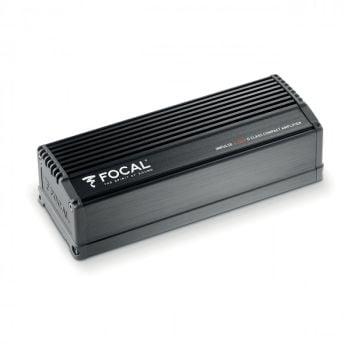

The role of the trusty 4-channel amplifier has always been the same – existing a great way to build a one-amplifier system design that can be expanded later when funds permit. Here are some great ways to utilise a 4-channel amplifier:
Powering main speakers and a subwoofer
This classic wiring arrangement sees a pair of full range speakers powered by channels 1&2 with its high pass (HP) filter applied at around 80Hz to 100Hz, while channels 3&4 are bridged into one more powerful channel to power one or two subwoofers with its low pass filter engaged at a similar 80Hz to 100Hz.
There are a couple of important things to consider with this popular speaker arrangement – mostly to do with channels 3&4. When bridging two amplifier channels together the impedance load seen by each of these two channels is one half of the total load. Most 4-channel amplifiers have a minimum per channel load limitation of 2ohms, so that means the total impedance load must be no lower than 4ohms. This can be achieved in numerous ways, either by one single 4ohm voice coil subwoofer, by a dual 2ohm voice coil subwoofer wired in series (or one coil connected per channel), or even by two dual 4ohm subwoofers with each wired in series (8ohms) and then paralleled together to arrive at 4ohms.
4-channel amplifiers that also offer a supplied or optional remote level controller for channels 3&4 will come in handy for this wiring scheme - especially if your source unit does not offer its own dedicated output with level control. Similarly, an amplifier that offers speaker level inputs and auto on/off trigger signal sensing will be handy for cars that are retaining to factory source unit that may lack RCA outputs or an easily defined 12V trigger source.
Powering main speakers when adding a mono amplifier
A logical next step from the first example system design is to team your 4-channel amplifier with a mono amplifier, and this has a few key advantages over buying an all-in-one solution like a 5-channel amplifier. 5-channel amplifiers tend to be quite large and long – especially if they offer high power output. This, in turn, makes them difficult to fit in smaller cars or under seats, and so all the wiring needs to be run to the rear of the car. Teaming a 4-channel and a mono allows you to place one under each front seat – reducing cable run lengths.
The main benefit of teaming a 4-channel and mono amplifier is that you can mix and match the power outputs to suit your specific loudness requirements – especially with the mono. Most 5-channel amplifiers’ mono channels make between 300WRMS and 500WRMS, and usually this is into a 2ohm load. If you have the freedom of choosing any mono amplifier then power outputs can be any level you desire (even thousands of watts!), while you now get a wide selection of models that are best suited 2ohm or 1ohm loads to suit your requirements.
Similarly, 5-channel amplifiers tend to have a ceiling power output from the main 4-channels of around 50-70WRMS, while you may desire higher power than this. Choosing separate 4-channel and mono amplifiers is more flexible here too, with 4-channel models offering as much as 150WRMS per channel at 4ohms if required.
Powering an active 2-way front stage array
There are huge sound quality tuning benefits to running your front speakers in an ‘active’ speaker array, whereby the tweeters and midrange drivers are each powered by their own discrete amplifier channel. Since this negates the use of the passive crossover network from most split component sets (unless they have a bi-amp mode), you’ll need a 4-channel amplifier that features crossover filters that can be adjusted to cater for this very speaker wiring arrangement. In most cases, this would require two channels being able to high passed from around 4000Hz to 6000Hz, and the other two channels low pass from the same frequency range. Not all 4-channel amplifiers are capable of this, but it is also possible to achieve this via an external DSP (Digital Signal Processor) or a suitably flexible crossover built into a higher-end head unit.
Being able to vary the high and low pass filter points allows you to select frequencies that arrive at the ideal sound quality and power handling compromise that you are seeking. With each speaker powered by its own channel you also get the ability to finely tune their relative output levels compared to each other to fine tune the tonal balance precisely. If you also have a DSP processor you can also reap the benefits of individual channel equalisation and time correction.
Powering a ‘semi-active’ 3-way front stage array
Another way a 4-channel amplifier can be employed is with a semi-active speaker array powering a pair of tweeters and midrange speakers from channels 1&2, plus a pair of mid-woofers from channels 3&4.
In this arrangement a 2-way passive crossover network is utilised that splits the frequencies between the tweeters and midrange speakers (typically at somewhere around 4000Hz to 6000Hz). These channels still require a high pass filter to protect the smaller midrange speakers from bass information, and for this the high pass filter frequency will need to suit the specific speakers you have chosen. For a traditional 3-inch sized midrange this would be around 400Hz to 500Hz at 12dB per octave.
Channels 3&4 will then power the larger mid-woofers, and the same frequency used for high passing the 3-inch midrange speakers can be employed as low pass on these channels for the mi-woofers to ensure all frequency bands are covered.
Not all 4-channel amplifiers feature a scope of frequency adjustment for their high and low pass controls to work with every possible speaker array on sale, so you need to consider this with your choice of speakers and amplifier. If your head unit offers variable high and low pass filters you can always use these in conjunction with those in your amplifier to get the job done.
Dual 4-channels powering a 3-way front stage plus rear fill
The humble 4-channel amplifier can be used in numerous ways as your system design grows and develops over time. A single 4-channel amplifier powered system like we’ve suggested in our first example here could grow through each of these examples, with the ultimate version of dual 4-channel amplifiers employed to power a fully active 3-way front stage and rear fill. Here one 4-channel amplifier power the tweeters and 3-inch midrange speakers on individual channels, while a second 4-channel amplifier powers the mid-woofers from two channels and rear fill (or a subwoofer) from channels 3&4. Obviously, a system design like this would require you to choose an amplifier model with the ideal crossovers, or you could use an external DSP processor. Either way, it shows just have flexible and useful the 4-channel amplifier is!