
-
Sale
 Pioneer GM-D9701 Class-D Car Mono Channel Amplifier w/ Bass Boost Remote
 Special Price $298.00 Regular Price $540.00
You Save $242.00 off RRP -
Sale
 Pioneer GM-D8701 Mono 1600W Class-D Car Amp with Bass Boost Remote
Special Price $241.20 Regular Price $365.00
Pioneer GM-D8701 Mono 1600W Class-D Car Amp with Bass Boost Remote
Special Price $241.20 Regular Price $365.00
You Save $123.80 off RRP -
Sale
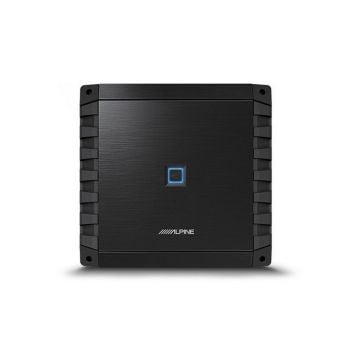 Alpine S2-A60M S2-Series 600W RMS Class-D Monoblock Amplifier
 Special Price $401.00 Regular Price $469.95
You Save 15% off RRP -
Sale
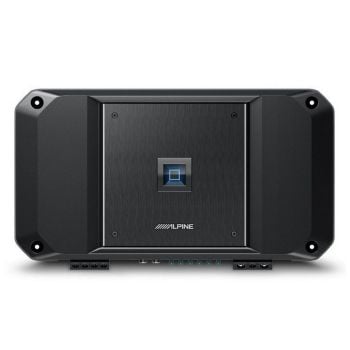 Alpine R2-A150M R2-Series 1500W RMS Class-D Monoblock Amplifier
Special Price $761.00 Regular Price $899.95
Alpine R2-A150M R2-Series 1500W RMS Class-D Monoblock Amplifier
Special Price $761.00 Regular Price $899.95
You Save $138.95 off RRP -
Sale
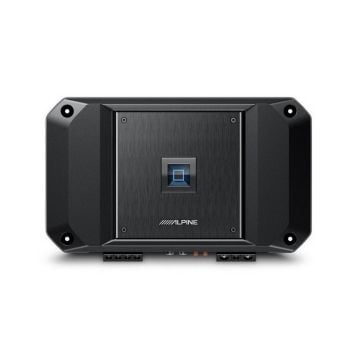 Alpine R2-A75M R2-Series 750W RMS Class-D Monoblock Amplifier
Special Price $600.00 Regular Price $699.95
Alpine R2-A75M R2-Series 750W RMS Class-D Monoblock Amplifier
Special Price $600.00 Regular Price $699.95
You Save 14% off RRP -
Sale
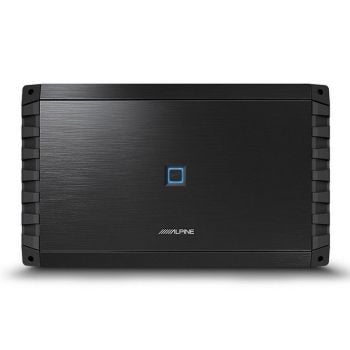 Alpine S2-A120M S2-Series 1200W RMS Class-D Monoblock Amplifier
Special Price $534.00 Regular Price $649.95
Alpine S2-A120M S2-Series 1200W RMS Class-D Monoblock Amplifier
Special Price $534.00 Regular Price $649.95
You Save $115.95 off RRP -
Sale
 Clarion XC2110 400W Micro Mono Block Class D Car Marine Amplifier
 Special Price $169.87 Regular Price $234.99
You Save 28% off RRP -
Sale
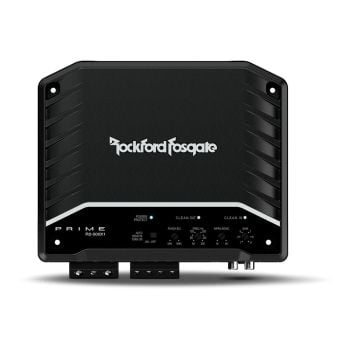 Rockford Fosgate R2-500X1 Prime 500W Mono Amplifier
 Special Price $424.15 Regular Price $499.00
You Save 15% off RRP -
Sale
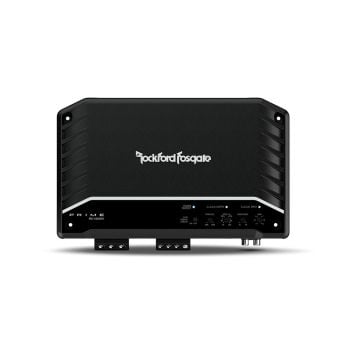 Rockford Fosgate R2-1200X1 Prime 1200W Mono Amplifier
Special Price $607.20 Regular Price $759.00
Rockford Fosgate R2-1200X1 Prime 1200W Mono Amplifier
Special Price $607.20 Regular Price $759.00
You Save $151.80 off RRP -
Sale

-
Sale
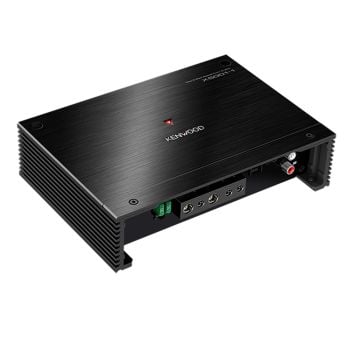 Kenwood X5001-1 Compact D-Class Mono AmplifierSpecial Price $324.35 Regular Price $399.99
You Save 19% off RRP -
Sale
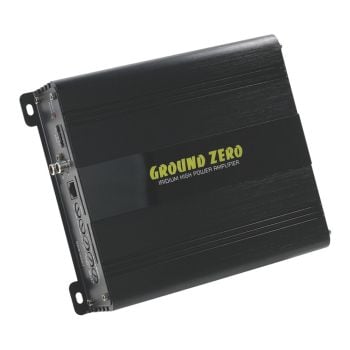 Ground Zero Iridium Mono Amplifier GZIA 1000.1
 Special Price $405.00 Regular Price $479.00
You Save 15% off RRP -
Sale
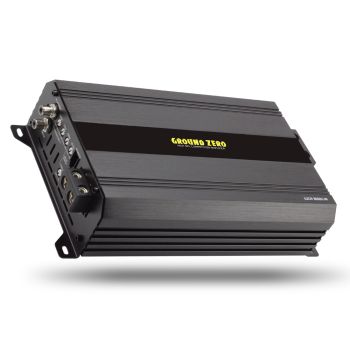 Ground Zero Monoblock Competition Amplifier GZCA 3000X.M1
Special Price $849.00 Regular Price $999.00
Ground Zero Monoblock Competition Amplifier GZCA 3000X.M1
Special Price $849.00 Regular Price $999.00
You Save $150.00 off RRP -
Sale
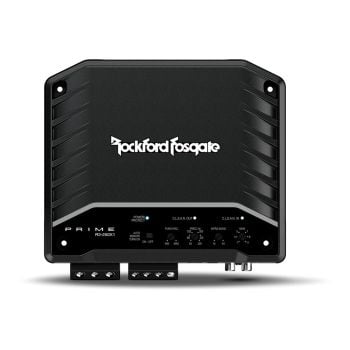 Rockford Fosgate R2-250X1 Prime 250W Mono Amplifier
Special Price $327.20 Regular Price $409.00
Rockford Fosgate R2-250X1 Prime 250W Mono Amplifier
Special Price $327.20 Regular Price $409.00
You Save 20% off RRP -
Sale
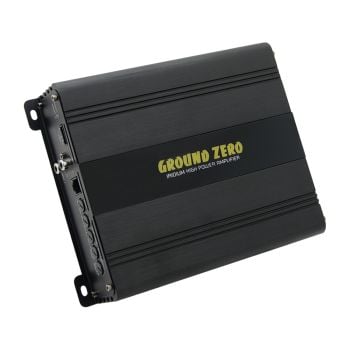 Ground Zero Monoblock Iridium Amplifier GZIA 500.1
Special Price $335.00 Regular Price $399.00
Ground Zero Monoblock Iridium Amplifier GZIA 500.1
Special Price $335.00 Regular Price $399.00
You Save 16% off RRP -
Sale

-
Sale
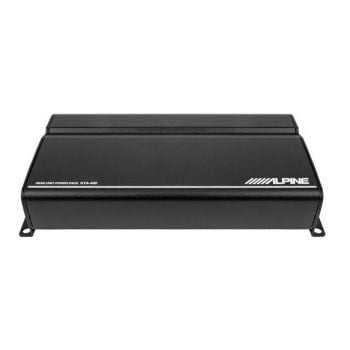 Alpine KTA-200M Power Pack 200W RMS Class-D Monoblock Amplifier
Special Price $315.00 Regular Price $349.95
Alpine KTA-200M Power Pack 200W RMS Class-D Monoblock Amplifier
Special Price $315.00 Regular Price $349.95
You Save 10% off RRP -
Sale
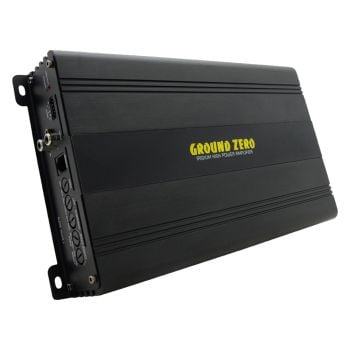 Ground Zero Monoblock Iridium Amplifier GZIA 1500.1
Special Price $590.00 Regular Price $699.00
Ground Zero Monoblock Iridium Amplifier GZIA 1500.1
Special Price $590.00 Regular Price $699.00
You Save $109.00 off RRP -
Sold Out
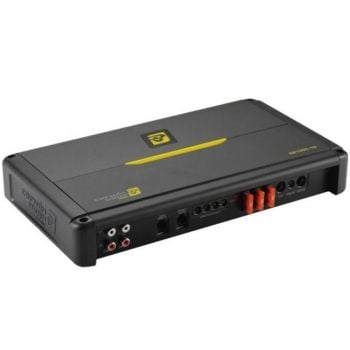 Cerwin Vega S91000.1D Stroker Series Monoblock Digital Amplifier
 Special Price $625.00 Regular Price $899.00
You Save $274.00 off RRP -
Sale
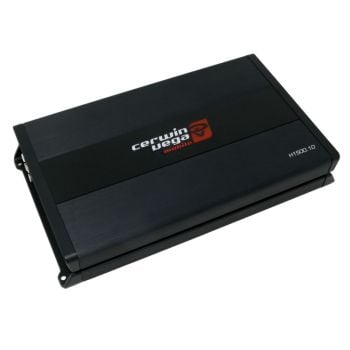 Cerwin Vega H1500.1D HED Series Monoblock Digital Amplifier
Special Price $510.00 Regular Price $729.00
Cerwin Vega H1500.1D HED Series Monoblock Digital Amplifier
Special Price $510.00 Regular Price $729.00
You Save $219.00 off RRP

How much power do you need?
You simply can’t add a subwoofer to your sound system without adding a suitable mono amplifier to power it, as subwoofers are power hungry and require hundreds of watts to move their large, heavy cones. Here are some tips to help you find the perfect subwoofer.
Start by choosing the subwoofer array first!
How much power do you need?
While the simplest answer to this question is to use the RMS power input rating (ignore peak power) of your chosen subwoofer/s, there is a little wiggle room. If your amplifier is not quite as powerful as the subwoofer rating suggests it is still ok team them together, but you need to be mindful that it is easy to damage the subwoofer with too small an amplifier. When an amplifier is over-driven (the user turns the volume level up – asking for more power than the amplifier is capable of) the result is a distorted music signal from the amplifier’s outputs, and this distortion can damage voice coil of the subwoofer. This happens even though the subwoofer hasn’t reached its maximum excursion capability and so you may not hear the damage occurring. This scenario is probably the most common way a subwoofer is damaged but is easily avoidable if you understand the situation.
Conversely, it is far less dangerous for the subwoofer’s voice coils if you use an amplifier that is more powerful than the subwoofer’s suggested input power. This is because the user is far less likely to over-drive the amplifier’s outputs in the same manner. Also, when over-driven with too much power the subwoofer will reach mechanical limits that will be clearly audible to the user, who will be more likely to react and turn the bass level back to a suitably safe level.
In general, a power input level that is above or below the subwoofer’s RMS rated power recommendation by around 20% is fine if you can understand these two prior situations.
Impedances and wiring together multiple voice coils – how does this work?
Understanding impedance and voice coils is important when choosing a subwoofer and amplifier pairing, as it is easy to damage the amplifier if you get this wrong. While mono amplifiers will suit either a 2ohm or 1ohm impedance load, you can mix and match the number of subwoofers, or the choice of subwoofer voice coil types (single or dual), their individual voice coil impedance (2, 4 or 1ohm), and even the way you wire them (in series or parallel) to suit the final impedance load you want.
Here are some common examples:
- A single 2ohm or 4ohm voice coil = 2ohm or 4ohms
- Dual 4ohm voice coils wired in parallel = 2ohms
- Dual 4ohm voice coils wires in series = 8ohms
- Two dual 4ohm voice coil subwoofers each wired in series (8ohms each), and then wired in parallel to each other = 4ohms
- Three dual 4ohm voice coil subwoofers each wired in series (8ohms each), and then wired in parallel to each other = 2.67ohms
- Dual 2ohm voice coils wired in parallel = 1ohm
- Dual 2ohm voice coils wires in series = 4ohms
- Two dual 2ohm voice coil subwoofers each wired in series (4ohms each), and then wired in parallel to each other = 2ohms
- Three dual 2ohm voice coil subwoofers each wired in series (4ohms each), and then wired in parallel to each other = 1.34ohms
What features do I need from the amplifier?
While the fundamental job of the mono amplifier is to power subwoofers, there are a host of additional features that may make some mono amplifier more suitable to your needs than others. This will depend greatly on the specific installation situation you have.
A sound system featuring a modern aftermarket head unit that has a dedicated pair of subwoofer RCA pre-outs with both a level control and an adjustable low pass filter lets you choose pretty much any mono amplifier on the market as they will all work great in this scenario. While our preferred 24dB per octave low pass filter slopes are not offered from all mono amplifiers on sale (many are the shallower 12dB per octave), if the head unit has a low pass filter you will be able to ‘cascade’ the low pass filters of the head unit and amplifier to achieve the steeper 24dB per octave slope. Experimenting with this can result in better bass tightness and blending with the front speakers.
If your car retains the factory integrated head unit you will be lacking RCA pre-outs as well as a suitable 12V ignition triggered wire to turn the amplifier on and off. You will also be lacking an independent volume level control for the subwoofer versus the main speakers, and you’ll be reliant completely on the low pass filter and other signal processing in the mono amplifier to tune the system with. In this scenario there are some very specific features you will need from your mono amplifier to make this work and to get the best results, though not all mono amplifiers offer all of these features.
Speaker level inputs is a feature that allows you to parallel a pair of speaker wires from the powered channels leading to the front speakers and feed them as a stereo music signal to the amplifier. Auto turn on/off triggering is a feature that will see the music signal coming in through the inputs stage and trigger the amplifier to turn on automatically, then turn off again once the car is turned off. A remote level controller (offered as an option on many mono amplifiers) allows you to vary the subwoofer’s level compared to the main speakers instead of turning the bass level up and down – which can adversely affect the main speakers. A steeper 24dB low pass filter will sound tighter and blend better with the main speakers. Variable bass boost is a great way of emphasising the kick drum through the subwoofer itself, without over-loading the main speakers in the car by boosting bass via the head unit.