

EV Wall Chargers
Charge your electric vehicle faster, smarter and more conveniently at home with an EV wall charger. A dedicated home EV charger can provide significantly faster charging than a standard power outlet, with options ranging from 7kW single-phase chargers through to 11kW and 22kW three-phase systems. Whether you simply want reliable overnight charging or a smart charger that can make better use of your rooftop solar, choosing the right EV wall charger can reduce charging costs and make owning an electric vehicle easier.
Choosing the Right EV Charger for Your Home
The best EV charger for your home depends on your vehicle, electrical supply, solar system and how you intend to charge. While a higher maximum charging rate can provide greater flexibility, your actual charging speed will be limited by the lowest-rated component between your home's electrical supply, EV charger and the vehicle's onboard AC charger.
For many Australian homes, a 7kW single-phase EV charger provides more than enough capacity for overnight charging. Homes with three-phase power can consider 11kW or 22kW EV chargers, allowing compatible vehicles to charge considerably faster. Even where a vehicle cannot currently accept the charger's full output, installing a higher-capacity charger can provide additional flexibility for future vehicles.
7kW, 11kW or 22kW EV Charger?
- 7kW EV chargers typically operate from a 32A single-phase circuit and are a popular choice for everyday home charging.
- 11kW EV chargers use three-phase power and can provide faster AC charging for compatible vehicles.
- 22kW EV chargers typically operate at up to 32A across three phases and provide the highest commonly available AC home charging capacity for vehicles that support it.
A 22kW wall charger does not mean every EV will charge at 22kW. Many electric vehicles have an onboard AC charging limit of 7kW or 11kW, while others can accept up to 22kW. Always check your vehicle's maximum AC charging capability when selecting a charger.
Socketed vs Tethered EV Chargers
EV wall chargers are generally available in either tethered or socketed configurations.
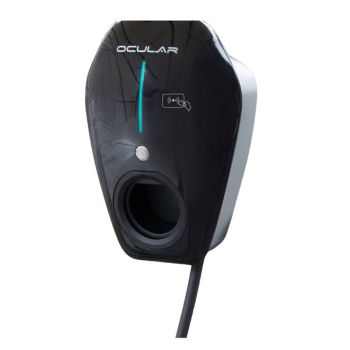
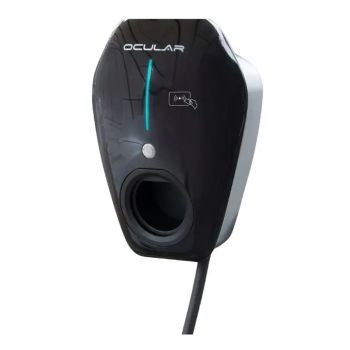
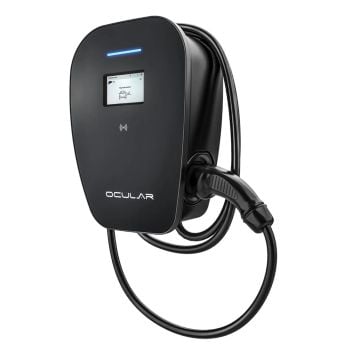
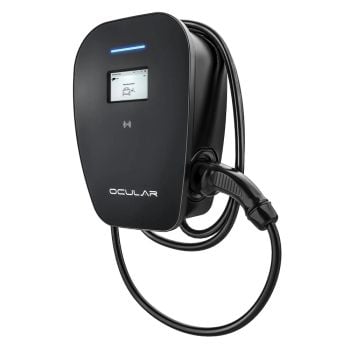
Tethered EV chargers have the charging cable permanently attached to the wall unit. They are convenient for daily use because the cable is always ready - simply unwind it and plug it into the vehicle.
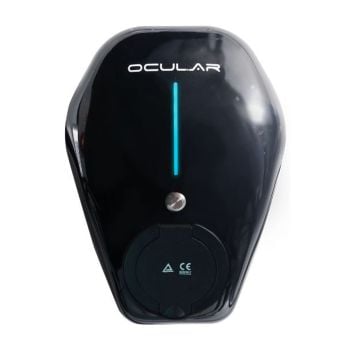
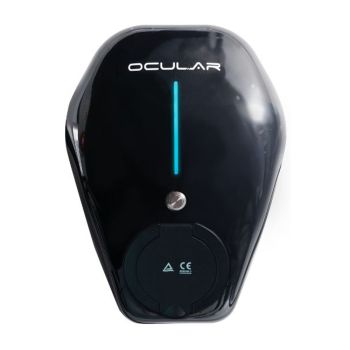
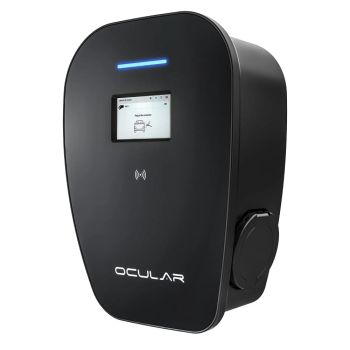
Socketed or untethered EV chargers use a Type 2 socket and a separate charging cable. This creates a cleaner installation when the charger is not in use and allows the cable to be replaced independently if it becomes damaged or worn. It can also allow different cable lengths to be used to suit the location of the charger and vehicle.
Smart EV Charging
Modern smart EV chargers can do much more than simply supply power to a vehicle. Depending on the model and installation, smart charging features can include:
- Scheduled and off-peak charging
- Solar surplus charging
- Dynamic load balancing
- Adjustable charging current
- Single-phase and three-phase charging
- Automatic phase switching on compatible models
- Wi-Fi, Ethernet, Bluetooth or 4G connectivity
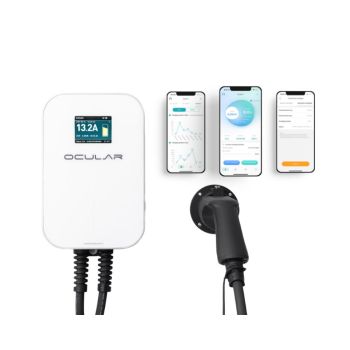
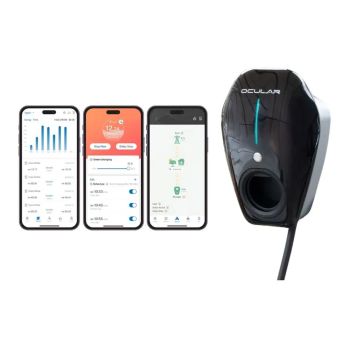
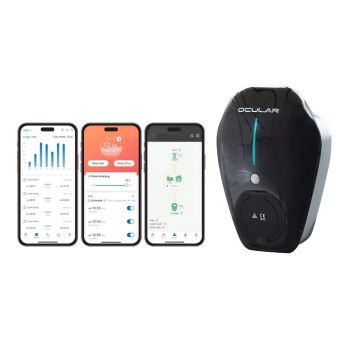
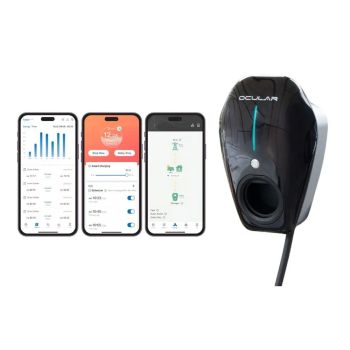
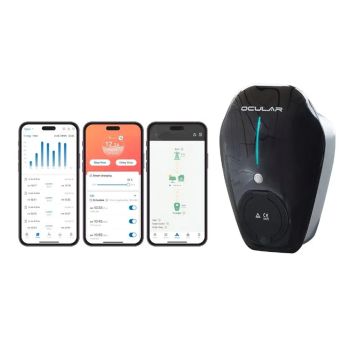
- Mobile app monitoring and remote control
- Charging history and energy consumption reporting
- RFID, PIN or app-based access control
- OCPP support for compatible energy management and charging platforms
These features can be particularly useful for households with solar, multiple high-power electrical loads, variable electricity tariffs or more than one electric vehicle.
EV Charging with Solar
A solar-compatible EV charger can help maximise the amount of rooftop solar used to charge your vehicle instead of exporting excess generation back to the grid. Depending on the charger, solar charging may use current transformers (CTs), a smart meter or an energy management device to continuously measure electricity being imported from and exported to the grid.
More advanced chargers can automatically adjust the charging current as available solar generation changes throughout the day. Some three-phase chargers can also automatically switch between single-phase and three-phase charging, allowing charging to continue when only a small amount of surplus solar is available.
This can be particularly important because AC EV charging generally requires a minimum current of approximately 6A. On single phase this equates to approximately 1.4kW, whereas maintaining the same minimum current across three phases requires approximately 4.1kW. A compatible charger with automatic phase switching can therefore make use of substantially smaller amounts of excess solar than a charger that remains in three-phase mode.
Solar charging capability varies significantly between EV chargers. Some models provide advanced solar management as standard, while others require additional CT clamps, smart meters, energy management devices or compatible solar hardware. Check the individual product specifications to determine what additional equipment may be required.
Dynamic Load Balancing
Dynamic load balancing allows a compatible EV charger to monitor the total electrical demand of the property and automatically adjust vehicle charging power to suit the available capacity.
For example, if high-power appliances such as air conditioning, an induction cooktop, electric hot water system or pool equipment are operating, the charger can temporarily reduce the power supplied to the vehicle. As household demand falls, charging power can increase again.
This can help prevent the home's electrical supply from being overloaded while still allowing the EV charger to use available electrical capacity efficiently. Depending on the charger, dynamic load balancing may require CT clamps, a smart meter or a separate load-management module.
Connectivity, Apps and Energy Management
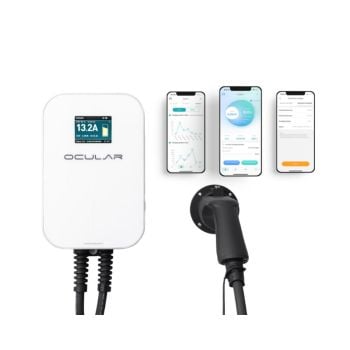
Many EV wall chargers can connect to a home network using Wi-Fi or Ethernet, with selected models also offering Bluetooth or mobile network connectivity. A connected charger may allow charging to be started, stopped or scheduled remotely, while providing information such as charging power, energy consumption, charging history and solar contribution.
For users wanting greater integration with home energy systems, selected chargers also support technologies such as OCPP, Modbus or external energy management platforms. These features can provide additional flexibility for integration with solar, battery storage, electricity tariffs, home automation and future energy management systems.
Outdoor EV Charger Installation
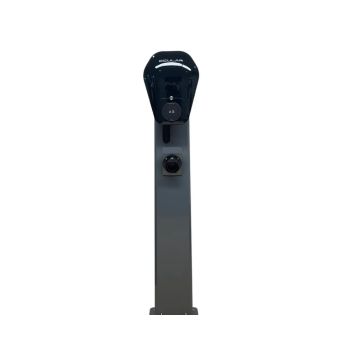
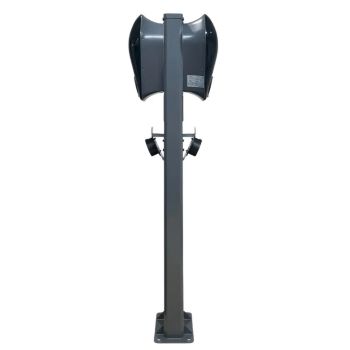
Many EV wall chargers are designed for indoor or outdoor installation and carry IP and impact-resistance ratings suitable for exposed environments. This can allow a charger to be installed in a garage, carport, beside a driveway or on an external wall, subject to the manufacturer's installation requirements.
If the vehicle is parked away from the charger, consider the required charging cable length before installation. Socketed chargers provide additional flexibility because an appropriately rated Type 2 charging cable can be selected separately to suit the distance between the charger and vehicle.
EV Charger Installation
EV wall chargers are high-power electrical appliances and must be installed by an appropriately licensed electrician in accordance with Australian electrical standards, the charger's installation requirements and applicable local regulations.
The installer will need to consider factors including the property's electrical supply, single-phase or three-phase availability, switchboard capacity, circuit protection, cable sizing, charger location and any required load-management or solar-monitoring equipment.
For 11kW and 22kW charging, a suitable three-phase electrical supply is generally required. The installer should also confirm whether dynamic load management is recommended based on the property's available supply capacity and other electrical loads.
Find the Best EV Wall Charger for Your Vehicle
Whether you need a straightforward home charger, a 22kW three-phase wall charger, a socketed EV charger, or an advanced smart charger with solar surplus charging and dynamic load management, our range includes solutions for different vehicles, homes and charging requirements.
Compare charging capacity, cable configuration, solar compatibility, connectivity and smart energy features to find the EV wall charger that best suits your vehicle and home.