
-
Sale
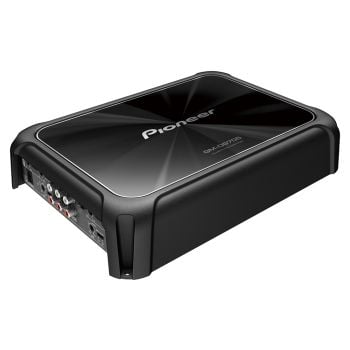 Pioneer GM-D9705 Class-D 5-Channel Amplifier with Wired Bass Boost Remote
 Special Price $411.00 Regular Price $700.00
You Save $289.00 off RRP -
Sale
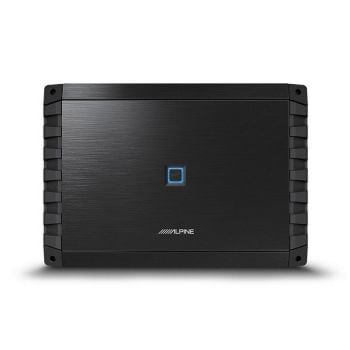 Alpine S2-A55V S2-Series 540W RMS Class-D 5-Channel Amplifier
 Special Price $535.00 Regular Price $629.95
You Save 15% off RRP -
Sale
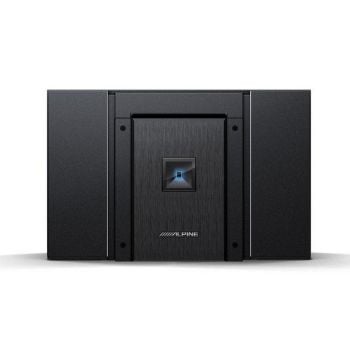 Alpine HDA-V90 Alpine Status 900W RMS Class-D Hi-Res 5-Channel Amplifier
Special Price $1,181.00 Regular Price $1,399.00
Alpine HDA-V90 Alpine Status 900W RMS Class-D Hi-Res 5-Channel Amplifier
Special Price $1,181.00 Regular Price $1,399.00
You Save $218.00 off RRP -
Sale
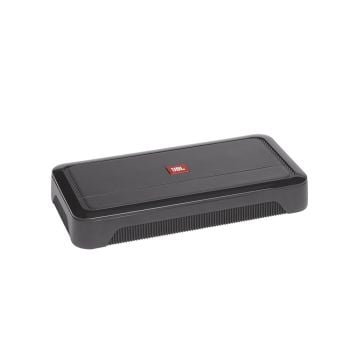 JBL Club A5055 5 Channel Amplifier
 Special Price $539.85 Regular Price $749.95
You Save $210.10 off RRP -
Sale
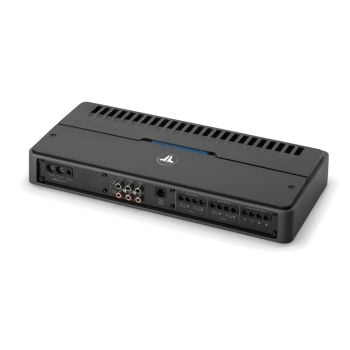 JL Audio RD Series 5-Channel Class-D Amplifier 900W RD900/5
 Special Price $950.00 Regular Price $1,149.00
You Save $199.00 off RRP -
Sale
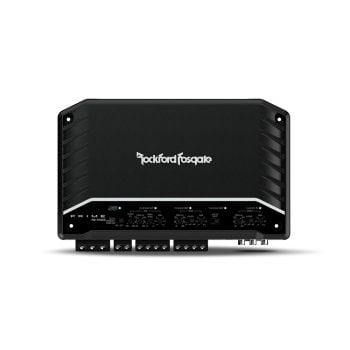 Rockford Fosgate R2-750X5 Prime 750W 5-Channel Amplifier
 Special Price $711.20 Regular Price $889.00
You Save $177.80 off RRP -
Sale
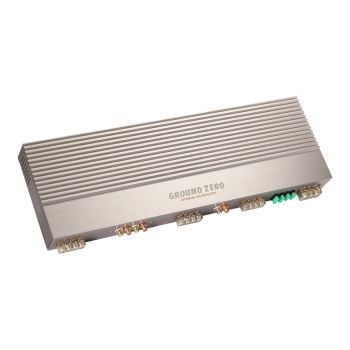
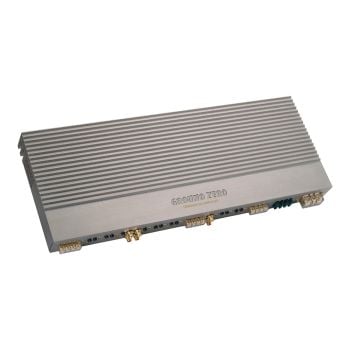 Ground Zero 6 Channel Uranium Amplifier GZUA 6SQ
 Special Price $2,095.00 Regular Price $2,469.00
You Save $374.00 off RRP -
Sale
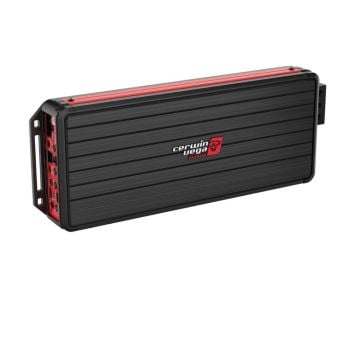 Cerwin Vega VCU85 Vega Series 5 Channel Digital Amplifier
 Special Price $695.00 Regular Price $999.00
You Save $304.00 off RRP -
Sale
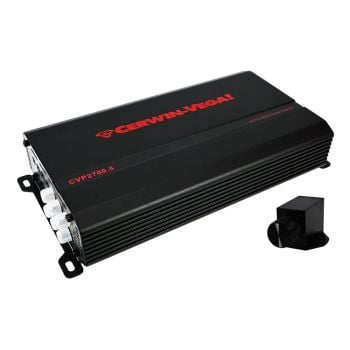 Cerwin Vega CVP2700.5 CVP Series 5 Channel Amplifier
Special Price $379.00 Regular Price $429.00
Cerwin Vega CVP2700.5 CVP Series 5 Channel Amplifier
Special Price $379.00 Regular Price $429.00
You Save 12% off RRP -
Sale
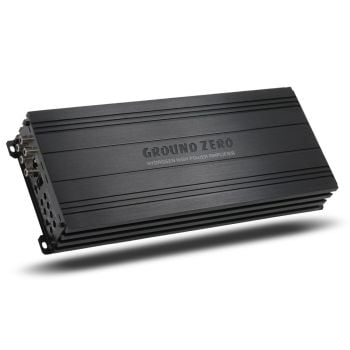 Ground Zero 5 Channel Hydrogen Amplifier GZHA MINI FIVE
Special Price $770.00 Regular Price $909.00
Ground Zero 5 Channel Hydrogen Amplifier GZHA MINI FIVE
Special Price $770.00 Regular Price $909.00
You Save $139.00 off RRP -
Sale
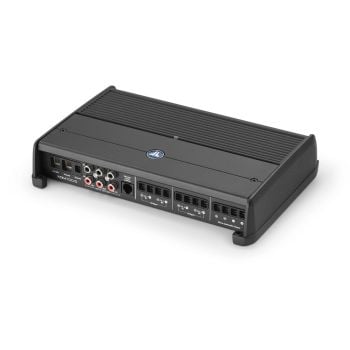 JL Audio XDM Series 5-Channel Class-D Amplifier 700W XDM700/5
Special Price $1,473.00 Regular Price $1,549.00
JL Audio XDM Series 5-Channel Class-D Amplifier 700W XDM700/5
Special Price $1,473.00 Regular Price $1,549.00
You Save 5% off RRP -
Sale
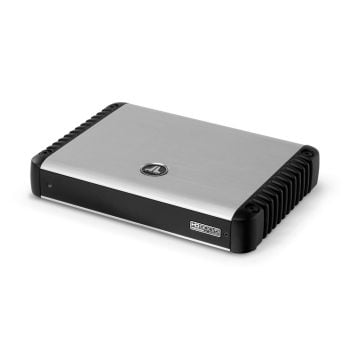 JL Audio HD Series 5-Channel Class-D Amplifier 900W HD900/5
Special Price $2,490.00 Regular Price $2,619.00
JL Audio HD Series 5-Channel Class-D Amplifier 900W HD900/5
Special Price $2,490.00 Regular Price $2,619.00
You Save $129.00 off RRP -
Sale
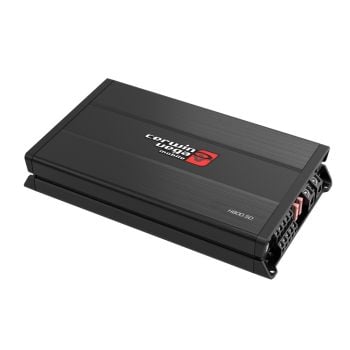 Cerwin Vega H800.5D HED Series 5 Channel Digital Amplifier
Special Price $695.00 Regular Price $999.00
Cerwin Vega H800.5D HED Series 5 Channel Digital Amplifier
Special Price $695.00 Regular Price $999.00
You Save $304.00 off RRP -
Sale
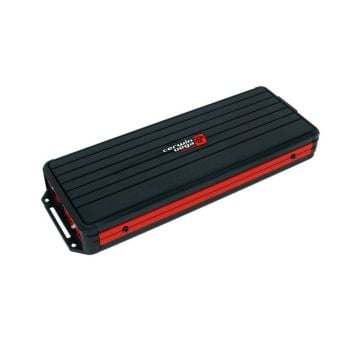 Cerwin Vega VCU86 Vega Series 6 Channel Digital Amplifier
Special Price $765.00 Regular Price $1,099.00
Cerwin Vega VCU86 Vega Series 6 Channel Digital Amplifier
Special Price $765.00 Regular Price $1,099.00
You Save $334.00 off RRP -
Sale
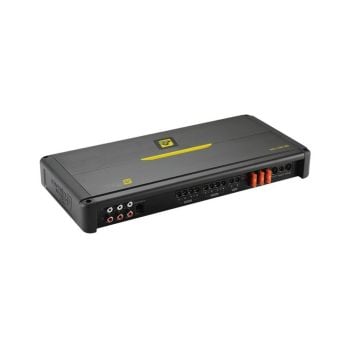 Cerwin Vega S91100.5D Stroker Series 5 Channel Digital Amplifier
Special Price $699.00 Regular Price $1,099.00
Cerwin Vega S91100.5D Stroker Series 5 Channel Digital Amplifier
Special Price $699.00 Regular Price $1,099.00
You Save $400.00 off RRP -
Sale
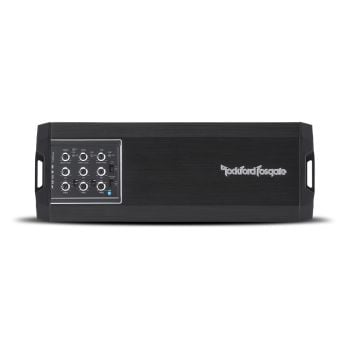 Rockford Fosgate T1000X5ad Power 1000W Class-AD 5-Channel Amplifier
Special Price $1,304.80 Regular Price $1,631.00
Rockford Fosgate T1000X5ad Power 1000W Class-AD 5-Channel Amplifier
Special Price $1,304.80 Regular Price $1,631.00
You Save $326.20 off RRP


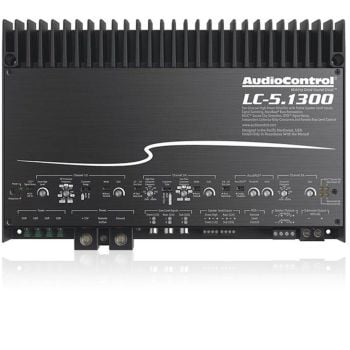

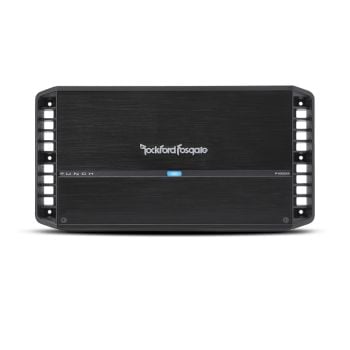
The 5-channel amplifier is the one-amp-solution that makes powering an entire sound system of main speakers and subwoofers easy. Automotive Superstore has dozens of examples on offer from our major and specialist brands so there is sure to be one that will suit your budget and your needs. Here are some great ways to utilize a 5-channel amplifier:
The classic front/rear/subwoofer set up
The most common way to connect your 5-channel amplifier is to power a pair of front full range speakers from channels 1&2, a rear pair from channels 3&4, then your subwoofer from channel 5. All 5-channel amplifiers work perfectly in this mode and have crossover filters that will work well for all types of speakers. Here you would engage the provided high pass filter for channels 1&2 at a frequency to suit the front speakers (say, 100Hz if they are 6-inch in size), then the same for the provided high pass for the rear speakers (maybe 70Hz if they are larger, like 6x9s), and finally set the 5th channel’s included low pass filter for the subwoofer at around 80Hz. Simple.
When choosing your subwoofer to mate to the amplifier’s mono subwoofer channel it is important to factor in the amplifier’s minimum allowable impedance for this specific channel, and ideally you want the subwoofer/s to match this precisely so that you get all the power you’ve paid for. Most 5-channel amplifiers have a subwoofer channel that makes its highest power to a 2ohm load, though a few make their highest power into a 1ohm load. You can find this listed in their specifications.
Thanks to the over-abundance of subwoofer types, styles, shapes and voice coil configurations – you’ll always be able to mix and match them to arrive at the desired impedance that your amplifier works best at. If your chosen 5-channel’s mono channel works best at 2ohms, one dual 4ohm voice coil subwoofer with the coils wired in parallel arrives at a 2ohm load. Two single 4ohm voice coil subwoofers wired in parallel achieves the same resulting 2ohm load, while two dual 2ohm subwoofers wired in a series/parallel wiring scheme can also arrive at the desired 2ohm final impedance load. For a 1ohm load you could use one dual 2ohm voice coil subwoofer with both coils wired in parallel, two single 2ohm subwoofers wired in parallel, or even two dual 4ohm subwoofers wired all in parallel to arrive at a 1ohm load final impedance load.
The active 2-way front stage, plus subwoofer set up
The next most common way to utilise a 5-channel amplifier is to power a pair of tweeters from channels 1&2, a pair of midrange speakers from channels 3&4, and then the subwoofer from channel 5. While there are a host of great sound quality tuning advantages to this arrangement, it is vitally important that you ensure that the tweeters and midrange drivers are only fed the specific frequency bands they can play back. This is critical for the tweeters to avoid damaging them!
While your split component set may have come with its own passive crossover, unless it is an advanced model with a bi-amp input capability (allowing each speaker to be fed by its own amplifier channel) then it cannot be utilised for both the midrange and tweeter simultaneously. You can, however, retain this for just the tweeter channel. The downside is that the midrange will not have its low pass filter applied, and while this will not damage the midrange it is less than ideal from a sound quality perspective.
There are some 5-channel amplifiers that offer crossover filtering that is designed for this exact speaker wiring arrangement, offering a variable high pass filter for channels 1&2 that offers a frequency range high enough to suit tweeters, and even a band pass filter (both a low pass and a high pass) for channels 3&4 to suit midrange drivers. We recommend looking at the high pass filter range for the tweeter channels to make sure it can achieve a frequency at least as low as is recommended by the speaker manufacturer to avoid damage to the tweeters. Some amplifiers only afford a high pass as high as 4000Hz at 12dB per octave, and many tweeters will require a high pass frequency higher than this.
The ideal set up for this speaker arrangement it to team any 5-channel amplifier with either an outboard DSP (Digital Signal Processor) or a higher-end head unit that houses its own adjustable 3-way crossover. The dedicated DSP will be best at this, as they offer infinitely variable crossover filter slopes and frequencies. You also benefit from independent channel level control, equalisation and time correction – all of which will yield immense sound quality benefits!
The semi-active 3-way front stage, plus subwoofer set up
It is possible to power a 3-way front stage of tweeters, midrange speakers and mid-woofers plus a subwoofer – all from 5-channels of amplification. In this arrangement, you would purchase a traditional 2-way split component set like a 6.5-inch based one, then purchase a matching 3-inch midrange pair to team with them.
When wiring them, the idea is to team the tweeters, 3-inch midrange speakers, and the 2-way passive crossovers (from the 2-way set you purchased) as a speaker set to be powered by channels 1&2. Since the 3-inch are much smaller they require a high pass filter of around 300Hz to 400Hz, and for this you’ll need a 5-channel amplifier that has this filter range.
The 6.5-inch (or whatever size you’ve chosen) mid-woofers will then be powered by channels 3&4 and will require a low pass filter at the same frequency as the high pass filter frequency you have chosen for channels 1&2 – this time from the crossover associated with channels 3&4 of the amplifier. This way all the frequency bands are catered for when the subwoofer is employed below 100Hz.
When choosing an amplifier for this specific speaker arrangement it is important that the amplifier offers both the crossover types and filter frequencies to suit this arrangement and the speakers you have chosen. Alternatively, you could use any 5-channel amplifier if you can achieve these crossover filter via another means – either via the head unit or an external DSP processor. Either way this is a great way to power a 3-way front stage plus a subwoofer from five channels of amplifier power.