
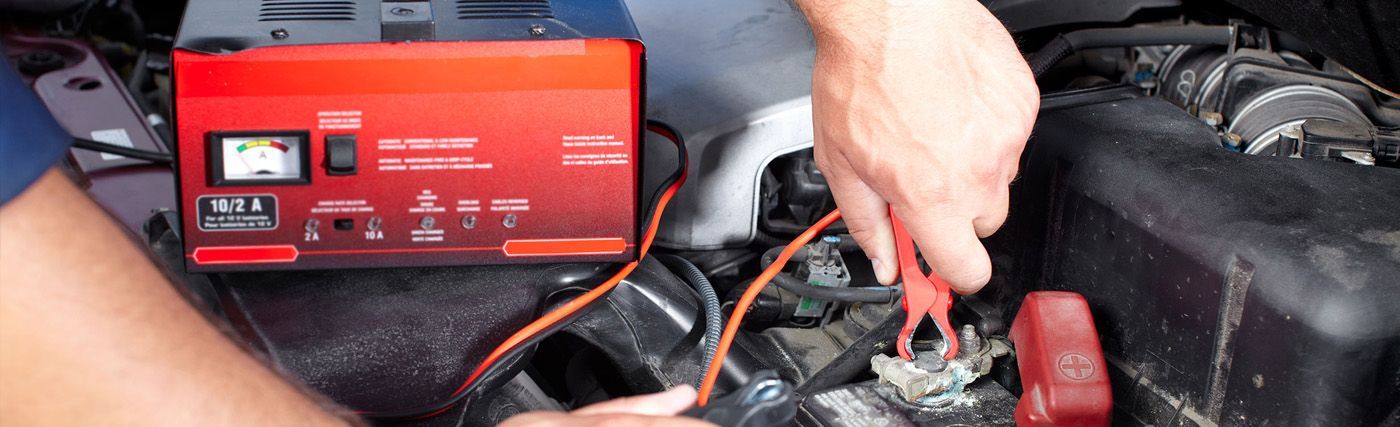
Buying a battery charger that offers the performance, functionality and compatibility you need can be a bit of a task. Accordingly, we have assembled a guide detailing that which matters most, so you know what’s what when purchasing a charger for your car, 4WD, boat, bike or any other internal combustion engine vehicle:
Compatibility: Ensure the charger is compatible with your vehicle's battery type. There are several different types of lead-acid chemistry batteries, as well as Lithium type batteries, each preferring a specific charge voltage that is suited to the unique chemistry upon which the battery is based. Most lead-acid batteries that are classified as Flooded (Wet), Maintenance Free, Silver Calcium (Sil/Cal) and Enhanced Flood Batteries (EFB) are best suited to charging at levels most commonly used in modern micro-processor equipped battery chargers. Absorbed Glass Mat (AGM) and Gel type lead-acids are valve-regulated lead-acid (VRLA) batteries, and utilise a fibreglass suspender and gelled electrolyte respectively to immobilise the electrolyte in the battery cells. VRLAs, such as those made by the likes of Optima and Odyssey, can require higher or lower charge voltages depending on the specific design and construction. Lithium type batteries utilise a completely different chemistry and construction, require a charge voltage and regime that is distinctly different to that used to charge lead-acid type batteries. Lithium type batteries are also equipped with intelligent battery management systems, which can confuse or refuse to charge when connected to a charger not designed to charge Lithium type batteries. Accordingly, it is critical to ensure that the charger you use is compatible with the specific chemistry of the battery you need to charge.
Amperage: Choose a charger with an appropriate amperage rating for your vehicle's battery size and charging needs. If you are simply looking for a trickle charger that will keep your battery topped-up when left to sit for extended periods, then anything capable of more than 1-100th of the battery’s capacity measured in Amphours (Ah) should be perfectly adequate for the task. If you are purchasing a charger for recovery and recharging purposes, then selecting a charger capable of 1/10th of the battery’s capacity measured in Amphours is idea. So, assuming you have a 100Ah battery, a trickle charger capable of 1-Amps, or a battery charger capable of providing 10-Amps of current, is idea for your purposes. With this is mind, it is also important not to charge smaller batteries with an overly capable charger. For example, it is preferable not to charge a battery at more than double the above recommendation, as this higher amperage delivery can be thermally intensive, causing the battery to warm up. This can also cause damage to the battery, or create a dangerous situation in the most extreme cases, especially is the battery being charged is faulty or failing. Some battery chargers, such as the GC150 from M81, offer multiple charge current levels and allow the charger to safely and reliably charge a very wide range of battery capacities, from as small as the back-up battery in your home security system, right up to something weighing in at over 50kgs with a capacity of several hundred Amphours, such as what you might find in a large motor yacht.
Charging Modes: Some chargers offer extended features designed for specific applications. The most important charge modes focus on the type of battery technology, the nominal voltage of the battery and the charge rate in Amps. Extended charging modes might include repair, desulfation, or equalisation, which are modes designed to pulse current into the battery at slightly higher voltages in order to blow out the cobwebs, so to speak, albeit for different reasons in different applications. Other charge modes include trickle or maintenance, which is designed to ensure the charger is gentle on the battery when connected for long periods.
Safety Features: Opt for chargers with safety features like reverse polarity protection, short-circuit, incorrect voltage sensing, overcurrent protection and spark-proof technology in order to maximise safety and prevent damage to your vehicle's electrical system or battery. The GC35 from M81 features all the above and more, adding thermal protection to ensure the charger itself doesn’t overheat and/or malfunction. These safety features are important to have, as we all make mistakes sometimes. Failing to use a charger which doesn’t have these important features in a way that is not in accordance with the manufacturers recommendations can not only lead to the destruction of your battery charger and damage to your battery, it also has the potential to create a dangerous situation. Always opt for a battery charger capable of affording you a second, third or forth chance, should you get it wrong one day when fiddling around under the bonnet in less than idea lighting conditions.
Portability: Just as it is true to say that the best camera is the one to have with you, same can be said of a battery charger. It is not good having the best battery charger available, if it is too big, too heavy or simply too cumbersome to take it with you where you go. Accordingly, considering the size, weight and portability of the charge you select for any specific task is key to ensuring it is there where you need it. The microprocessor-controlled battery chargers of today compare extremely favourable both in terms of size and weight when compared to older, more basic battery chargers. For added convenience seek out a charger supplied with a suitable storage solution, such as a case or bag, designed to keep it neat and organised when not in use.
Durability: Chances are, if you are deploying a battery charger, you are likely doing it outside, in the garage or in some other adhoc situation where things are likely to get bumped, knocked, dropped on the floor and generally exposed to the elements, whether that be the sun, rain or worst. Accordingly, you don’t want a charger that is likely to get damaged if you look at it wrong. Look for a charger with a ruggedised construction do to ensure it has suitable resilience to mechanical damage. Selecting a charger with a quality ingress protection classification, such as IP65, is a really good idea too. More generally, try to choose a charger made from quality materials and with a durable construction so to ensure longevity and reliability.
User-Friendly Features: It’s no good buying a charger with all the features you could possibly want, if you can’t navigate the menu. Look for chargers with a well thought out user-interface to ensure you can make the selections you need without needing to constantly refer to the manual for guidance. Features such as clearly laid out LED indicator, or a proper LCD screen, can really make the difference between a good charger and a great one.
Brand Reputation and Warranty: Purchase chargers from reputable brands known for their quality, innovation and customer support. It can also be worth perusing the warranty terms offered by one brand verses another, as this can reveal how confident they are in their product and the likelihood of failure due to defects or malfunctions.
By considering these factors, you can select a charger that meets your vehicle's needs and provides reliable and efficient charging whenever required.


