

Whether by choice or circumstance, every car owner needs to have a reliable jack on hand. They help out in many situations, especially when you need to change a tire. However, choosing a car jack isn't as simple as it may seem. Jacks come in many different styles, each with their drawbacks. Here's a look at four of the best car jacks on the market and some key advice that will help you choose the right one.
Safety Warning!
- All jacks should be used on a level surface.
- The un-lifted wheels of the vehicle should be chocked.
- No person should remain in a vehicle that is being lifted.
- A jack should be used for lifting and lowing only AND the raised vehicle should be supported on vehicle support stands.
- No person should get under a vehicle that is supported only by a jack.
- The vehicle manufacturer owner's manual should be consulted prior to the lifting of the vehicle.
Types of Car Jacks
The type of car jack you should get depends on the type of work you need to do. Here is an overview to help you understand your options.

Scissor Jack
Scissor jacks get their name for the long, self-locking screws they use to raise a vehicle. This a hand-operated jack and, while they have a simplistic design, they are very sturdy. In fact, many new cars come with a scissor jack in the trunk because they are so dependable when you need to quickly and easily get your car off the ground.
Operation is just a matter of turning the centrally located jack screw, which raises or lowers the vehicle. You can do this easily with a special tool, but a tire iron will work just the same. Like other jacks, different scissor jacks are available to fit a variety of needs regarding weight-bearing capacity. Sizes vary based on capacity, but scissor jacks are very portable overall. Check out this Orcon Scissor Jack.
Hydraulic Bottle Jack
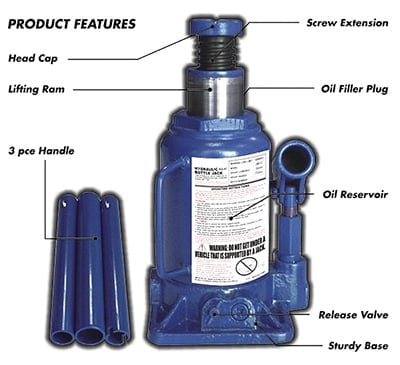
This automotive jack uses the power of hydraulics to lift a vehicle. The pressure is enough to lift up to several tons. These are large jacks, typically consisting of a cylinder, top, base, plunger, and pump filled with oil. When you use the plunger, it builds up oil pressure. The valves control this pressure and, in turn, allow you to control the jack by lifting and lowering the vehicle.
When shopping for one, note the rating. The rating tells you how much a jack can safely lift. Going over this rating is extremely dangerous and irresponsible, most likely resulting in the jack failing. With that said, even lower-end hydraulics are typically rated for 3 tons and can lift that amount with ease. Check out these Orcon Bottle Jacks with varying weight capacities.

Trolley Jack
If you need a jack for light-duty use, like working in your home's garage, you might very well consider a floor jack or "trolley" jack. Aluminum jacks are popular as they are lighter in weight and efficiently designed than jacks using other materials. In any case, a trolley jack will always make lifting your vehicle easy--most can do it in just ten pumps of the handle thanks to hydraulics.
Thanks to its four-wheel design, a trolley jack is ideal for getting under your vehicle quickly. The trolley design means rolling the jack under your vehicle is a breeze. There are also low-profile models available in case your vehicle has minimal ground clearance. Of course, as with other jacks, always check the weight rating before using a floor jack. Check out these Orcon Trolley Jacks.
High-Lift / 4WD Jack
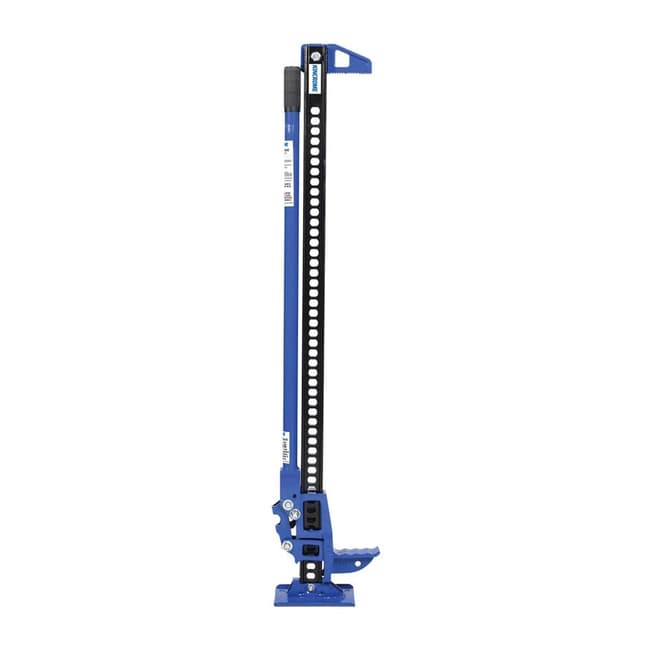
When you need to get your car far up off the ground, you need a high-lift jack. As the name implies, this type of jack gives you the maximum amount of lift. It's ideal for off-roader vehicles and trailer owners. Of course, they're mostly used for recovery work more so than regular garage use. They can be a lifesaver for off-roaders in an emergency situation, too.
Being both tall and slim, you can easily fit a high-lift jack into your vehicle. You can also strap it to the roof, which is a popular method for off-roaders. With all of this in mind, you should always be extra careful when using a high-lift jack. When positioning, be mindful of the small footplate as putting it in the wrong spot can make the jack unsteady. Additionally, once it's under a load, the jack handle requires careful control to prevent dangerous accidents.
Don’t use a Car Jack Without a Jack Stand
One rule of thumb that you should always follow is using a jack stand. Your car jack is a lifting tool only, not a support. Jack stands ensure that your vehicle is supported once lifted. Never trust a car jack on its own to hold up your car for long. Never place hands or feet under a vehicle if you do not have jack stands in place, and always be cautious anytime your vehicle is lifted even if stands are in place. As of 1 December 2019, a new mandatory requirement for the provision of jack stands goes into affect.
Using a car jack is a necessary, often unwanted, and potentially dangerous activity. Most people who find themselves using a car jack are likely doing so in an emergency road-side situation that they'd rather not be in. Regardless, if you ever need to use a car jack under any circumstance, you need to take your time and extra precautions to ensure you get back on the road safely.
While on the topic of safety, it's also worth noting that Australian safety standards have recently changed regarding car jacks and stands. Product Safety Australia reminds consumers that:
- You should always seek level and firm ground when setting up a jack.
- You should always chock your wheels.
- You should never place any portion of your body under a jack-supported vehicle.
- You should never allow someone to enter a jack-supported vehicle.
Additionally, trolley jacks specifically must begin complying with the requirements set forth in the "Consumer Goods (Trolley Jacks) Safety Standard 2017" from 20 December 2019 going forward. That means a trolley jack you purchase now may not already be in compliance and older jacks you already have are not up-to-date with the latest standards.